SYNCIN
design research
system design
UI/UX
selected as top 12 and showcased at india hci
This project focuses on enhancing attendee engagement, improving vendor interactions, and streamlining the management of temporary event setups through system design and connected experiences.
Team Members
Aman Sinha
Lyric Gupta
Role
Research
Conceptualising
Branding
UI/UX
Duration
2 months


INTRODUCTION
We chose to center our efforts on lifestyle events—a sub-sector that includes music festivals, artisan markets, cultural fairs, and pop-up exhibitions. These events are distinguished by their temporary nature, diverse and often unpredictable crowds, and a strong emphasis on creating engaging experiences for attendees.
Syncin addresses the specific challenges faced by these events, such as enhancing attendee engagement, improving vendor interactions, and streamlining the management of temporary setups.
SECONDARY FINDINGS


CORE STAKEHOLDERS
Attendees
Security Personnel
Organisers
Exhibitors
Venues
INSIGHTS
The lack of real-time parking updates leads to disorganized traffic flow, causing attendee frustration, congestion, and operational challenges that impact both event experience and local surroundings.
Many attendees arrive at lifestyle events without the intent to buy, leading to missed opportunities and lost sales for exhibitors. Purchases are often spontaneous, triggered by products catching attendees’ attention.
Unreliable internet at events limits attendees’ ability to engage with brands online, resulting in lost opportunities for exhibitors to build connections, drive conversions, and foster brand loyalty.
Smaller brands face challenges due to low recognition at lifestyle events, resulting in limited visibility among attendees and lost sales opportunities despite offering unique products that align with their interests.
Network disruptions force caterers and organizers to rely on prepaid cards for easier accounting and analytics. However, leftover balances on these cards are non-refundable, contributing to attendee dissatisfaction.
Organizers struggle to coordinate tasks due to lack of role-based access, resulting in information overload or incomplete visibility, which makes it harder to prioritize immediate issues.
THE PROCESS


SYSTEM ARCHITECTURE
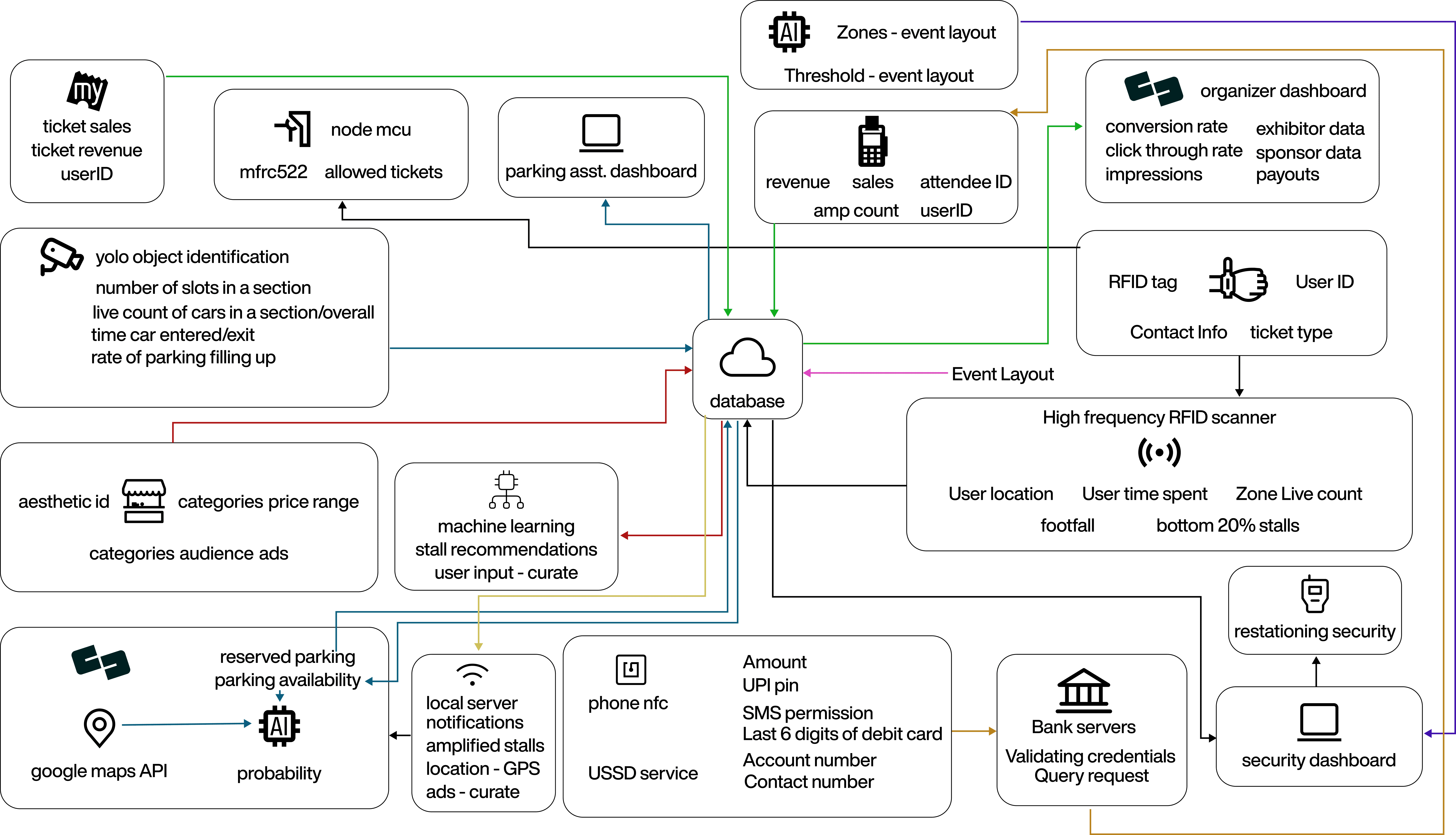
THE NODES
Node 1: Parking management and availability
Platform Design:
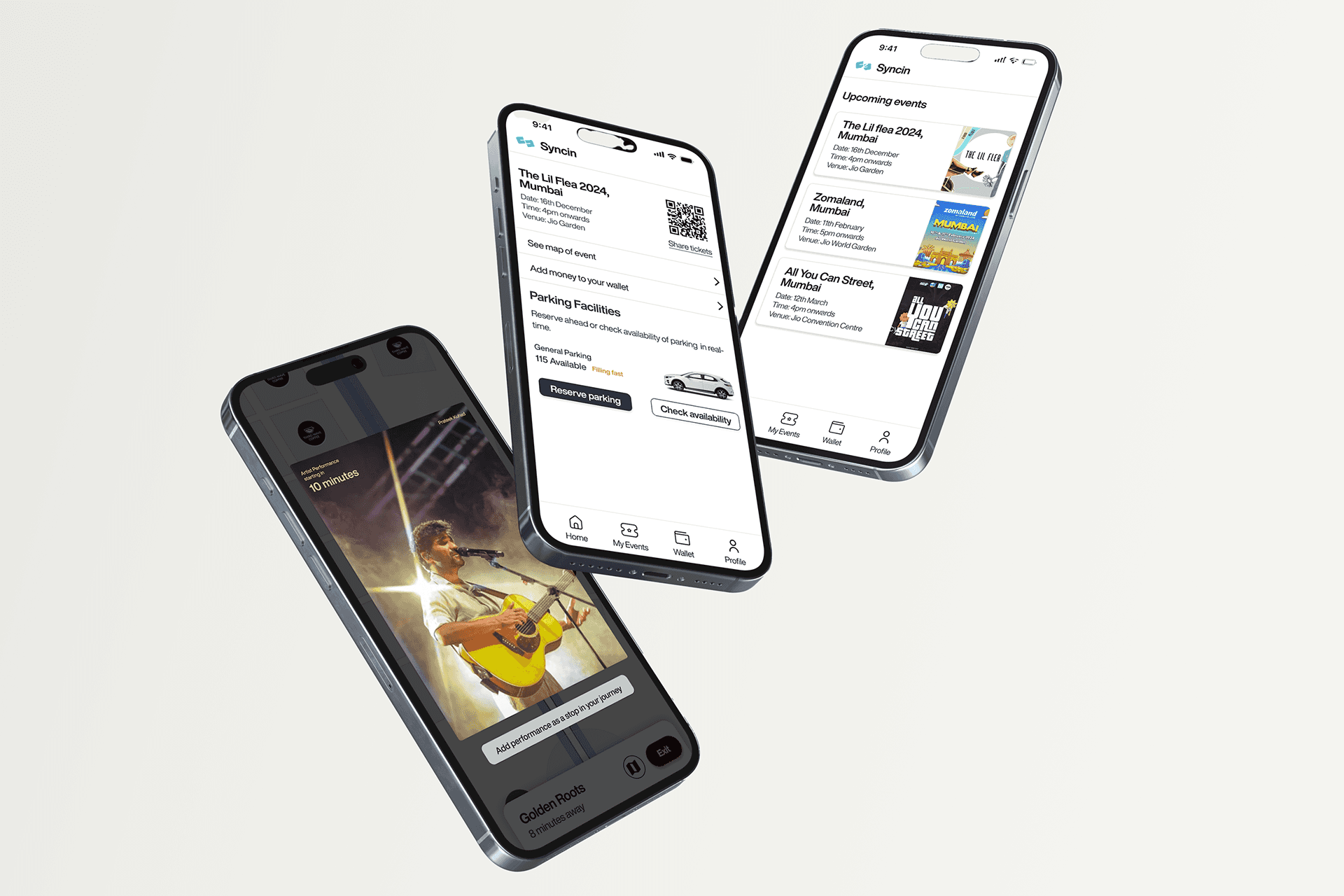
The Syncin app serves as the central platform for managing parking reservations and availability. Attendees can reserve their parking spots in advance, seamlessly integrating this data into a QR code for easy entry. This system ensures that parking information is accessible to both attendees and organizers, providing real-time insights into the parking situation.


Node 2: Curate
Platform Design:
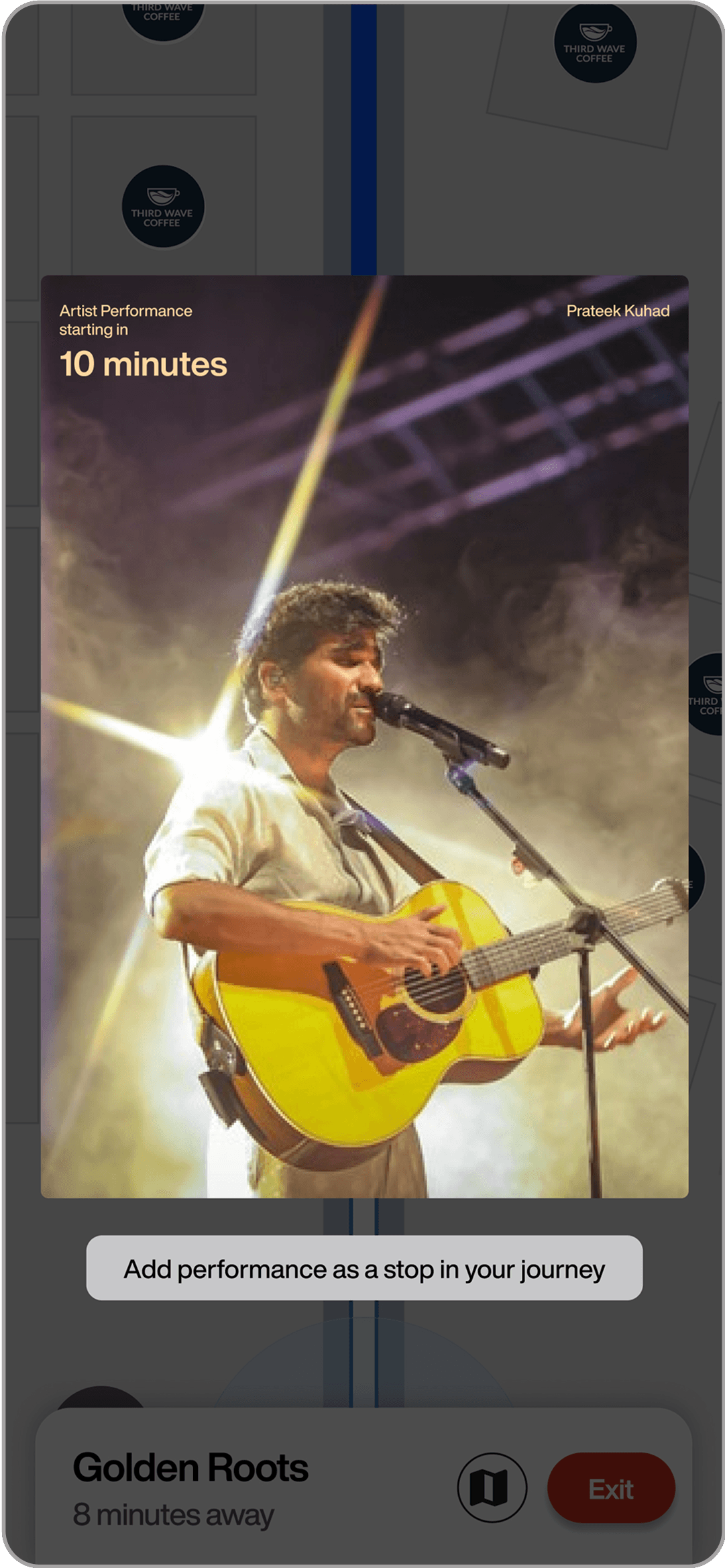
The Syncin app introduces the Curate feature to enhance the attendee experience by helping them discover stalls that align with their preferences. Using a dating app-inspired interface, users can swipe on products to express their interests. This data feeds into a machine learning algorithm that matches attendees with relevant stalls, making their event journey more enjoyable and efficient


Node 3: Amplify
Platform Design:
The Amplify feature within the Syncin app is designed to enhance the visibility of smaller brands at lifestyle events. By leveraging RFID technology to track foot traffic and purchase activity, the app identifies stalls that require support and connects attendees with niche brands, fostering a sense of community and engagement.
Ranking Calculation:
Identify the bottom 20% of exhibitors based on footfall.
Among these exhibitors, rank them based on their amp counts (purchases made at each stall).
Create a scoring system that combines low footfall with high amp counts, incentivizing engagement for stalls that have low visibility but high purchase activity.
For example: Score = (1 / Footfall Count) * Amp Count (Higher scores indicate more effective stalls relative to their low foot traffic).

Node 4: Payments
Platform Design:
The Payments feature on the Syncin app is designed to streamline transactions at lifestyle events, addressing network issues and the shortcomings of prepaid card systems. By leveraging NFC technology, USSD services, and the *99# framework, the app ensures that attendees can make fast, seamless payments even in areas with poor internet connectivity.


Node 5: Organizers Dashboard
The Organizers Dashboard is the central hub for event management on the Syncin platform, offering powerful tools for real-time decision-making and operations. It enhances efficiency by providing a tailored experience to different team members, automating key tasks, and integrating event data into one unified platform.


Node 6: Security Management and Crowd Control
Platform Design:
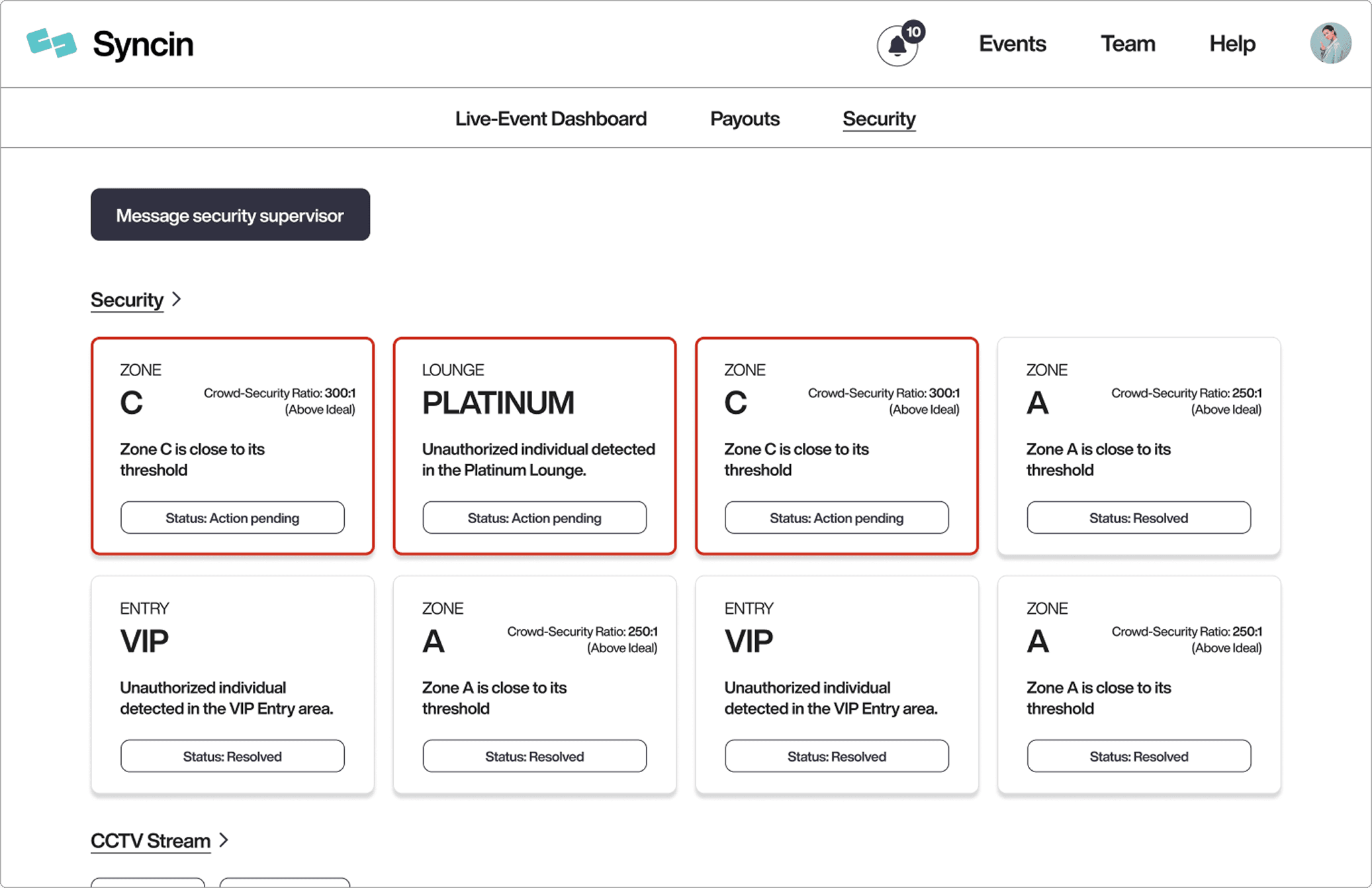
The Syncin app provides a centralized platform for real-time crowd management at events, using RFID technology to track attendee movements, manage access control, and monitor crowd density. This data is displayed on a dashboard for both organizers and security supervisors, enabling quick responses to overcrowding and potential safety concerns.

YOU MAY ALSO LIKE

FOUR TO SCORE

PATCH UP